Healthy Fats: How to Choose the Right Ones and Use Them Wisely

Healthy Fats: How to Choose the Right Ones and Use Them Wisely
For years, fat has been seen as something to avoid, but the truth is that fat is an essential part of a healthy diet. The key isn’t to cut out fat entirely, but to choose the right kinds and use them in moderation. The right fats can support heart health, brain function, and even make your meals more satisfying. Here’s a guide to understanding healthy fats and how to use them wisely in your everyday cooking.
Why Your Body Needs Fat
Fat is a major source of energy and helps your body absorb fat-soluble vitamins like A, D, E, and K. It also plays a role in building cell membranes, producing hormones, and supporting healthy skin, brain, and immune function.
But not all fats are created equal. The difference lies in their chemical structure—and that’s where your choices can make a big impact on your health.
Læs også:



Understanding the Different Types of Fat
Fats can be grouped into three main categories: saturated, unsaturated, and trans fats.
- Saturated fats are found mostly in animal products such as butter, cheese, whole milk, and fatty cuts of meat. Eating too much saturated fat can raise LDL (“bad”) cholesterol and increase the risk of heart disease.
- Unsaturated fats—both monounsaturated and polyunsaturated—are found in plant-based oils, nuts, seeds, avocados, and fish. These fats can help lower LDL cholesterol and support heart health.
- Trans fats are the least healthy type. They are found in some processed foods, baked goods, and fried fast foods. The FDA has largely phased out artificial trans fats in the U.S., but it’s still wise to check labels for “partially hydrogenated oils.”
A good rule of thumb is to limit saturated fats and replace them with unsaturated fats whenever possible.
Great Sources of Healthy Fats
There are plenty of delicious and natural sources of healthy fats. Here are some of the best:
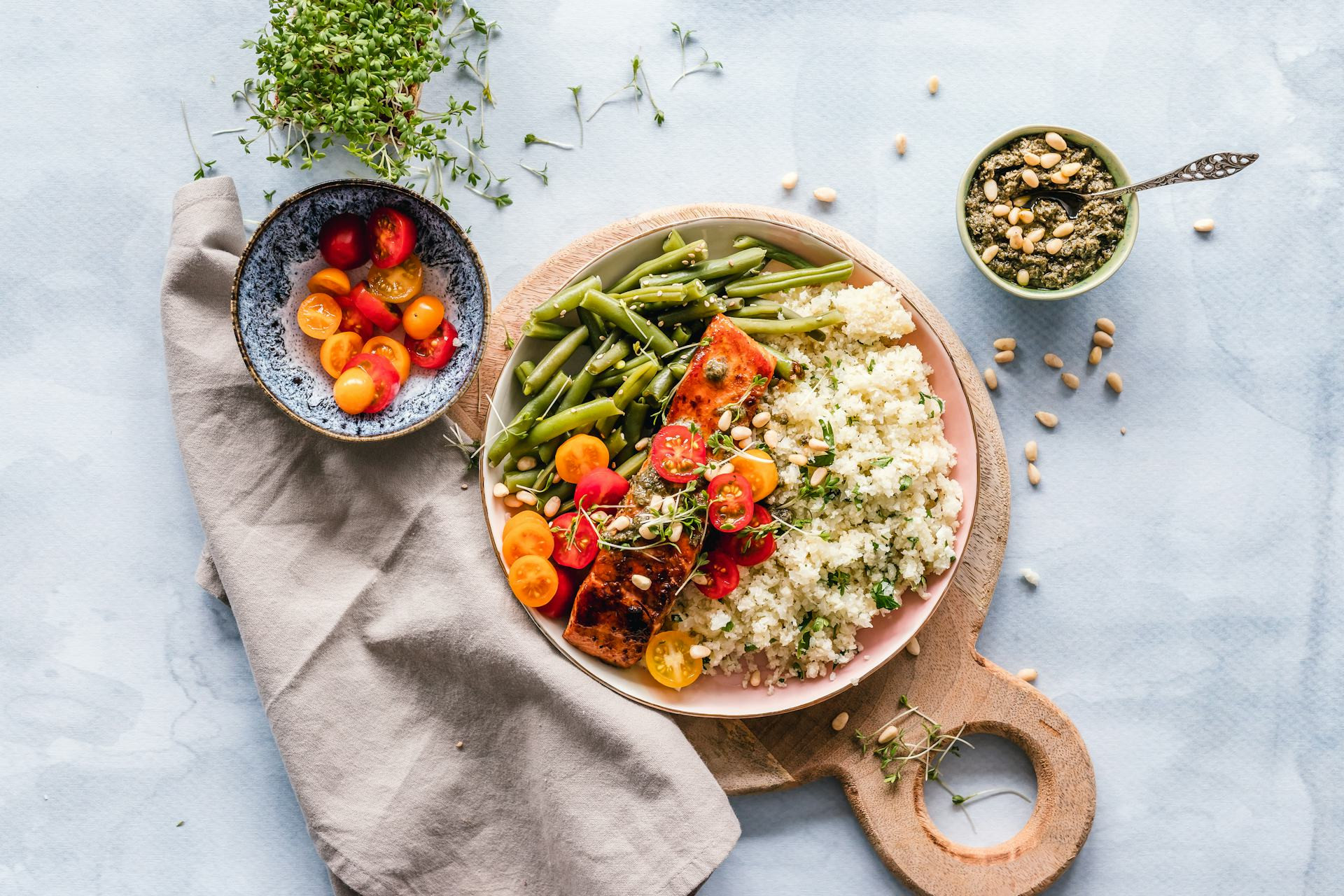
- Fatty fish such as salmon, sardines, trout, and tuna – rich in omega-3 fatty acids that support heart and brain health.
- Plant oils like olive, canola, sunflower, and avocado oil – great for cooking, dressings, and marinades.
- Nuts and seeds – especially walnuts, almonds, chia seeds, and flaxseeds.
- Avocados – a versatile source of monounsaturated fat that can be used in salads, sandwiches, or smoothies.
By using these sources instead of butter, lard, or cream, you can improve your fat balance without sacrificing flavor.
How to Use Fats Wisely in the Kitchen
Even healthy fats are high in calories, so moderation is key. Here are some practical tips for using fats smartly:
- Cook with oil instead of butter when possible. Canola and avocado oils handle high heat well, while olive oil is perfect for sautéing or drizzling over vegetables.
- Measure your portions – a tablespoon of oil goes a long way.
- Balance your plate – pair healthy fats with vegetables, whole grains, and lean proteins for a nutrient-rich meal.
- Read nutrition labels – many packaged foods contain hidden fats or added oils.
It’s not about cutting out fat completely, but about being mindful of how and where you use it.
What Research Says About Fat and Health
Recent research shows that the type of fat you eat matters more than the total amount. Diets rich in unsaturated fats—like the Mediterranean diet—are linked to lower rates of heart disease, better cholesterol levels, and improved overall health.
On the other hand, diets high in saturated and trans fats are associated with higher cholesterol and inflammation. That’s why the American Heart Association recommends choosing plant-based oils and fish over animal fats and processed foods.
Flavor, Enjoyment, and Common Sense
Fat is also a carrier of flavor, and food without it can taste bland. The goal isn’t to eliminate fat, but to enjoy it in a balanced way. Drizzle olive oil over roasted vegetables, sprinkle nuts on your salad, or savor a small piece of dark chocolate as part of a varied diet.
When you choose fats thoughtfully, you can enjoy delicious meals that nourish your body and support long-term health—without giving up the pleasure of good food.
Læs også: