Siblings as Learning Partners – Supporting Each Other with Homework

Siblings as Learning Partners – Supporting Each Other with Homework
When children grow up together, they share more than just a home and family life – they can also become each other’s best learning partners. Siblings have a unique opportunity to support one another with homework, practice skills together, and build both academic and social strengths. But how can families make this work in practice without it turning into arguments or frustration? Here are some ideas for how siblings can use their relationship as a resource for learning.
Learning Together – More Than Just Homework Help
When siblings work together on schoolwork, it’s not only about finishing assignments faster. It’s also about learning to cooperate, explain ideas, and develop patience. The older sibling strengthens their own understanding by teaching, while the younger one gains confidence and comfort from learning in a familiar environment.
Research on “peer learning” shows that students often learn effectively from one another. Siblings may not be the same age, but their close relationship makes it easier to ask questions, make mistakes, and try again without fear of judgment.
Setting the Scene for Productive Study Time
For sibling collaboration to work, it helps to create a routine and a calm environment. Setting aside a specific time for homework can make a big difference, especially in busy American households where after-school activities and screen time can easily take over.
- Choose a shared workspace – a kitchen table or desk where both can spread out their materials.
- Make a plan – decide what each person will work on and where they can help each other.
- Take breaks together – short breaks can boost energy and make the time more enjoyable.
- Keep it positive – celebrate small successes and be patient when things get tricky.
The goal is for homework time to feel like a shared activity, not a chore. When both siblings feel they’re contributing, motivation tends to grow naturally.
Læs også:


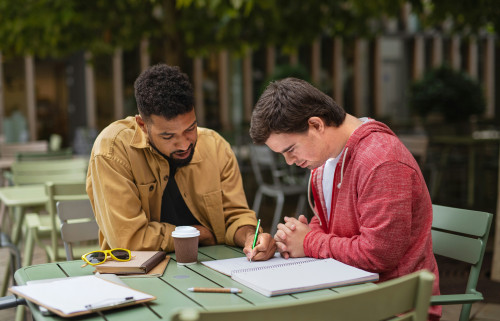
The Older Sibling as a Mentor – Without Becoming the Teacher
When an older sibling helps a younger one, it can be tempting to take charge like a teacher. But the best learning happens when the help is given with respect and curiosity. Instead of simply giving answers, the older sibling can ask questions that guide the younger one to think for themselves.
Try using phrases like:
- “How do you think we can figure this out together?”
- “Can you show me how you’re thinking about it?”
This turns the exchange into a conversation rather than a lecture. The older sibling practices explaining and listening, while the younger one feels supported rather than corrected.
Switching Roles
Even though the older sibling often takes the lead, the roles can easily switch. Maybe the younger one is better at reading aloud, writing creatively, or using technology. Allowing both to take turns being the “expert” builds confidence and mutual respect.
You can also make learning fun by creating small quizzes or games where both contribute questions. This keeps the atmosphere light and encourages teamwork.
Avoiding Comparison and Competition
One of the biggest challenges in sibling learning is avoiding comparison. If one child constantly feels “less smart,” motivation can quickly fade. That’s why it’s important to focus on effort rather than results.
Praise each other for trying, for explaining, and for helping – not just for getting the right answers. When learning becomes a shared project instead of a competition, both siblings benefit.
The Parents’ Role
Parents can support this process by setting the tone and providing structure. You don’t have to get involved in the homework itself, but you can help by keeping the environment positive and reminding your children that it’s okay to take breaks or ask for outside help if something feels too hard.
You might also suggest small shared goals – for example, both reading a chapter each evening and then telling each other what they learned. This builds consistency and motivation.
A Strength That Reaches Beyond School
When siblings learn to support each other, they develop more than academic skills. They build empathy, cooperation, and a sense of responsibility. They learn that growth happens together – and that learning doesn’t have to be a solitary experience.
Using the sibling bond as a learning resource can be a gift that lasts far beyond homework time. It strengthens relationships, builds confidence, and helps both children see that they can achieve more – both individually and together.
Læs også: